
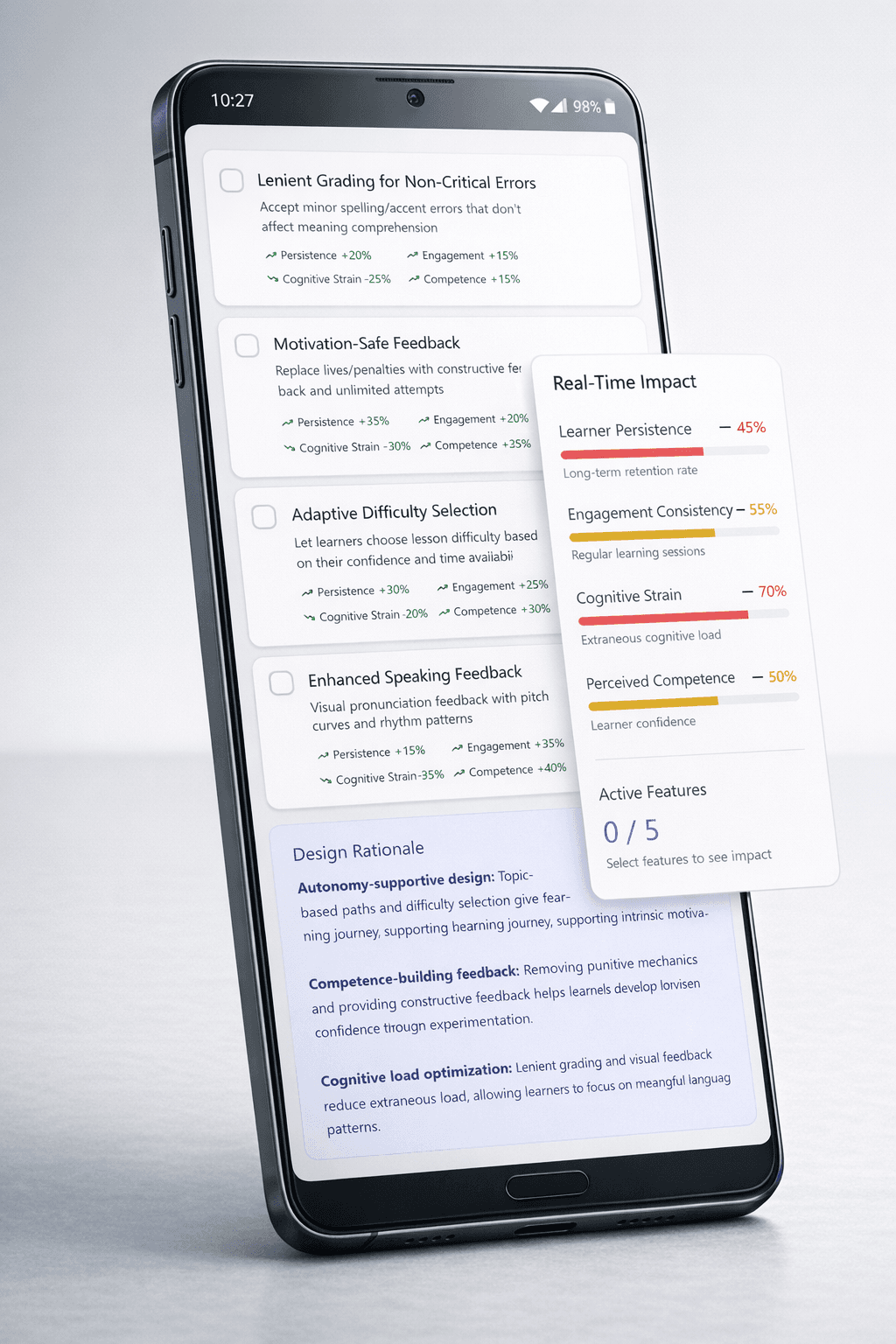
Overview:
Interactive Product Case Study App
Problem
Consumer learning platforms often optimize for engagement metrics—streaks, rewards, linear progression—without fully accounting for cognitive load or motivation stability. Mechanics such as immediate penalties and forced micro-interactions introduce extraneous load and destabilize perceived competence.
High engagement does not guarantee durable learning.
Solution
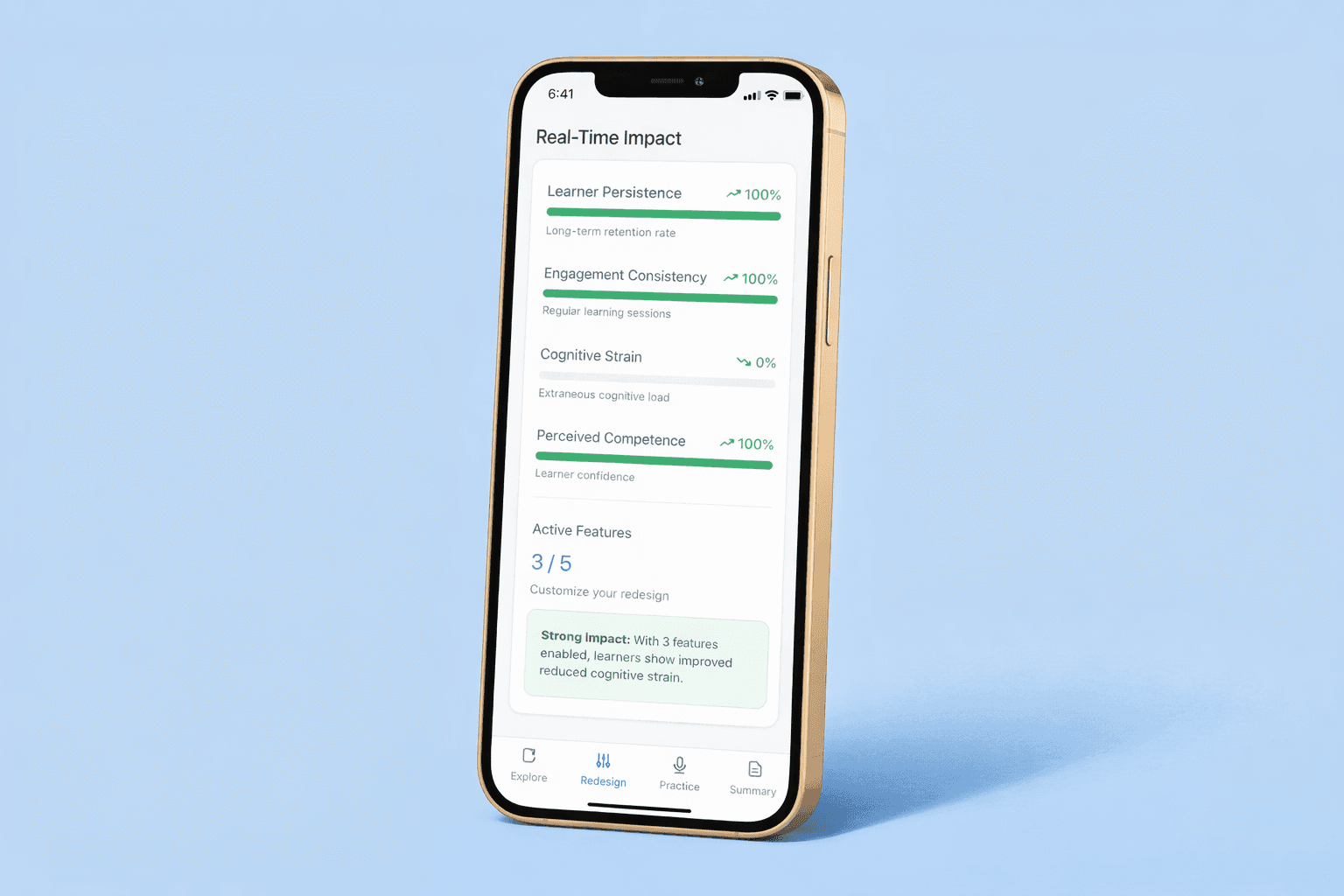
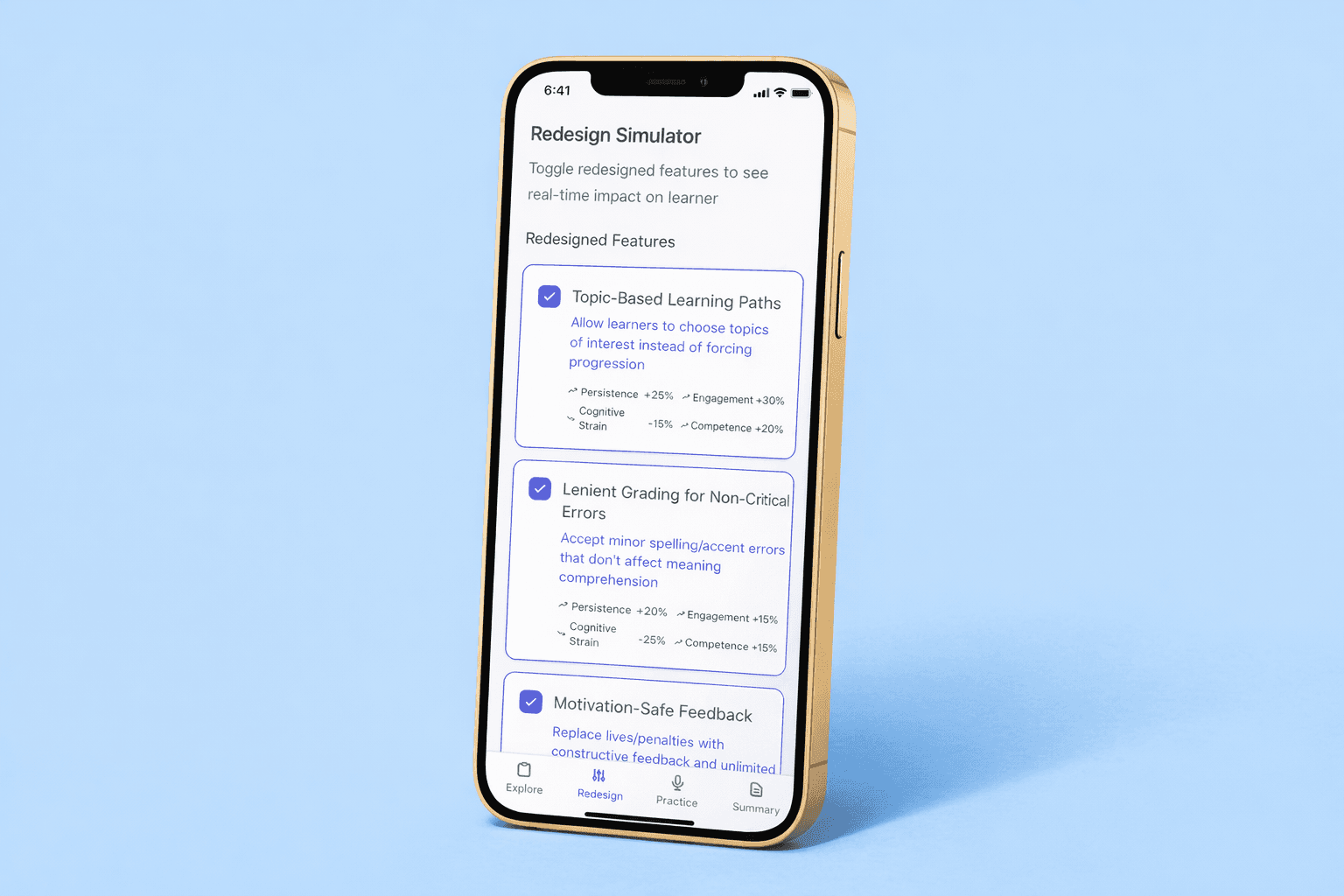
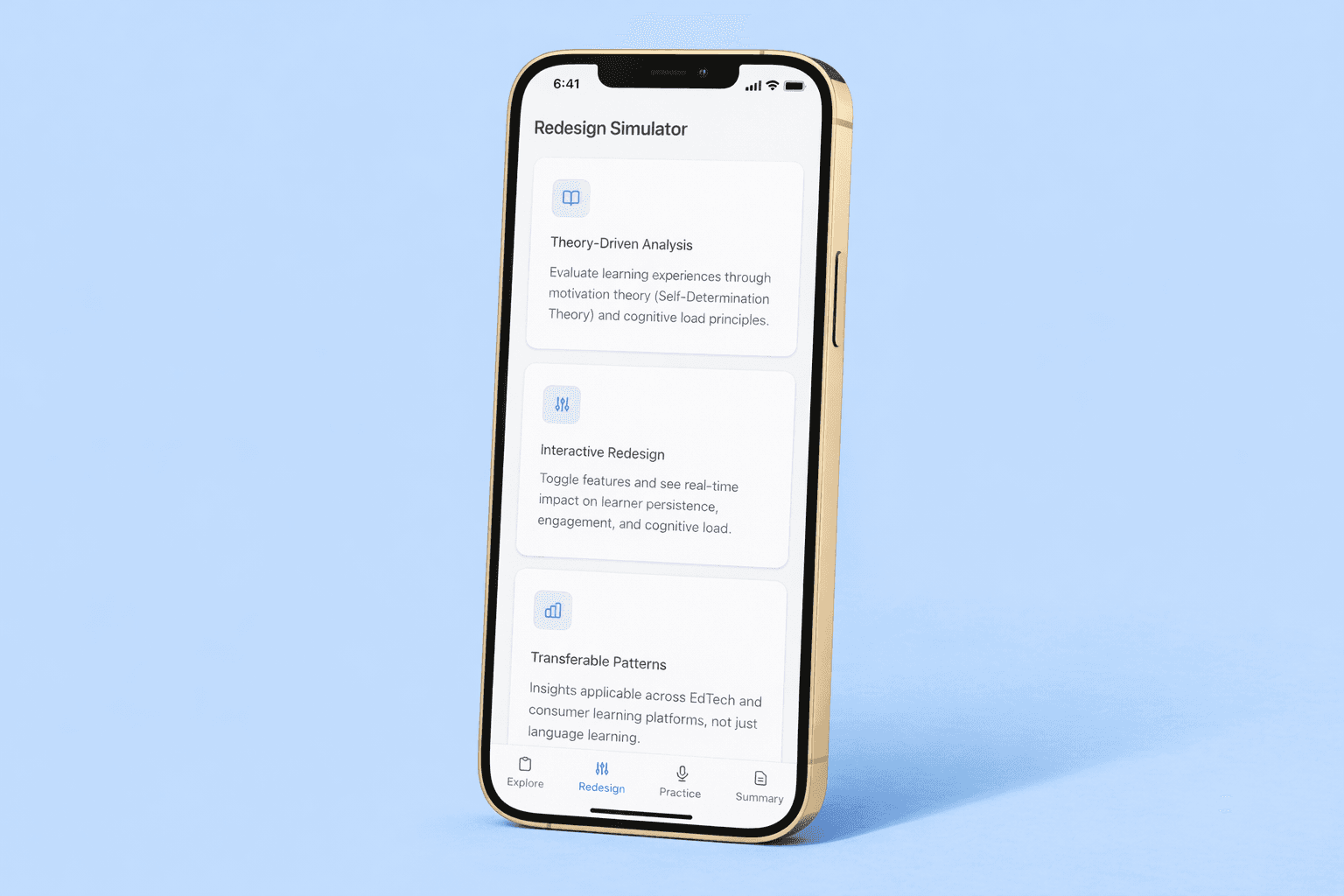
The Interactive Product Case Study App operationalizes motivation and cognitive load theory into product-level trade-offs. Users toggle core design variables—error penalties, adaptive progression, autonomy pathways—and observe projected impacts on persistence, cognitive strain, and competence stability.
This converts theory into actionable product evaluation.
Design Decisions
Toggle-based simulation model: Product leaders operate through trade-offs; static critique does not influence decisions.
Intrinsic vs. extrinsic visibility: Makes motivational balance explicit and measurable.
Extraneous load isolation: Demonstrates how UI mechanics compound cognitive strain.
Real-time metric feedback: Connects design decisions to projected behavioral outcomes.
Responsive architecture (desktop + mobile): Mirrors real deployment environments.
Functions as a pre-launch design evaluation framework for EdTech teams.